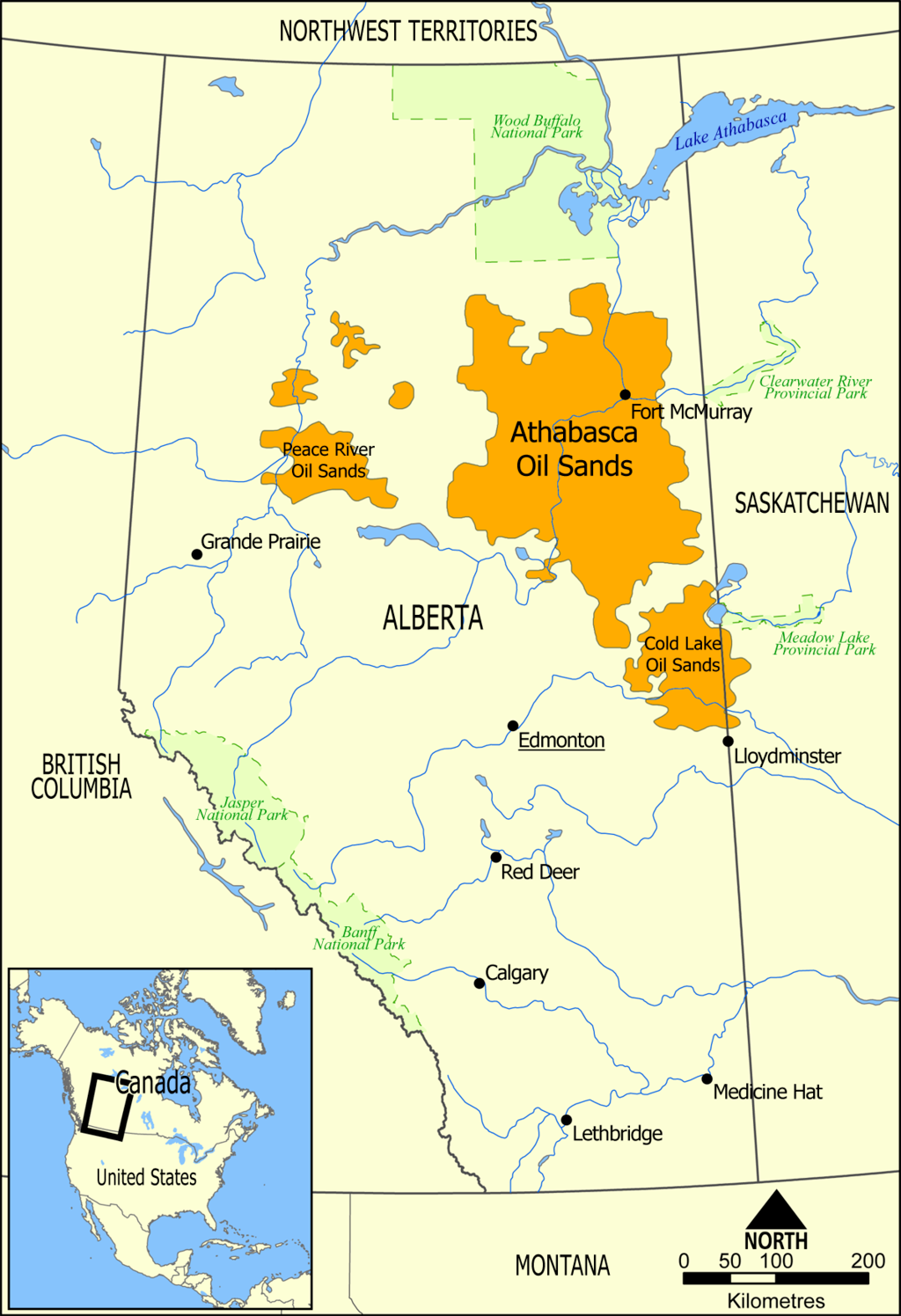
Alberta is home to the third largest proven oil reserve in the world. That reserve is known as the Athabasca Oil Sands, and it holds about 97% of all of Canada’s proven oil reserves, at 166.3 billion barrels of oil. The exploitation of these oil sands has been a topic of concern and conversation for well over one hundred years, whether it be theorising the different methods to exploit the resources as fast as possible, or how its exploitation is extremely harmful.
The extraction of resources from the Athabasca Oil Sands has been contested by climate activists for a long time because the open-pit mining technique most commonly used to extract the oil disturbs the boreal forest that sits on top of the oil reserves. As of now, about 0.19% of Alberta’s taigas have been disturbed by the open-pit mining used at the oil sands.
Some steps are taken to minimise the effects of oil sands mining, such as the Alberta government forcing companies to restore land to “equivalent” land capability, meaning that the land has to be able to support the life it did prior to mining.
In 2016, a wildfire in the Fort McMurray region of Alberta started and forced not only all residents of the city to evacuate, it also forced several thousand workers from the oil sands (from various companies) and the companies were forced to scale back operations, and thus approximately one million barrels of oil production was halted. If the oil sands caught fire, they would likely be near-impossible to put out due to the flammable nature of the oil.