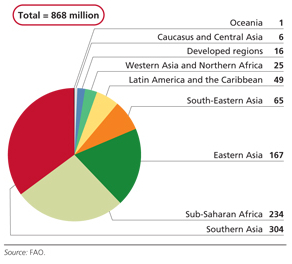
According to the U.S. Department of Agriculture, food security is at minimum “[t]he ready availability of nutritionally adequate and safe foods” and the “[a]ssurred ability to acquire acceptable foods in socially acceptable ways”, which means to acquire foods without emergency supplies, scavenging, stealing, or any other coping strategies.
There are many reasons that food security could be at risk, which include things such as pandemics, inflation, climate change, etc. Unfortunately, there are places around the world where food insecurity is used as an instrument for political and economic pressure, though it should not be done so, according to the World Food Summit 1996.
Food insecurity as a plethora of negative effects on people, and even just one would be reason enough to try and make sure everyone has food. For example, if there is rampant food insecurity, it opens up the community to mass hunger and famine, which is a very dangerous position to be in. Another effect that might be seen is people turning to crime or riskier or more dangerous forms of money-making, such as prostitution.
The other major consequence of food insecurity is severe malnutrition. Severe malnutrition is when you are lacking in nutrition, just severely. To be severely malnourished your mother will have been malnourished already during her pregnancy, and you must be malnourished for the first two years of your life before the damage is irreversible. Malnutrition is a major cause of stunted growth, as the human body will stunt growth to adapt to the lack of food, which can lead to developmental challenges.