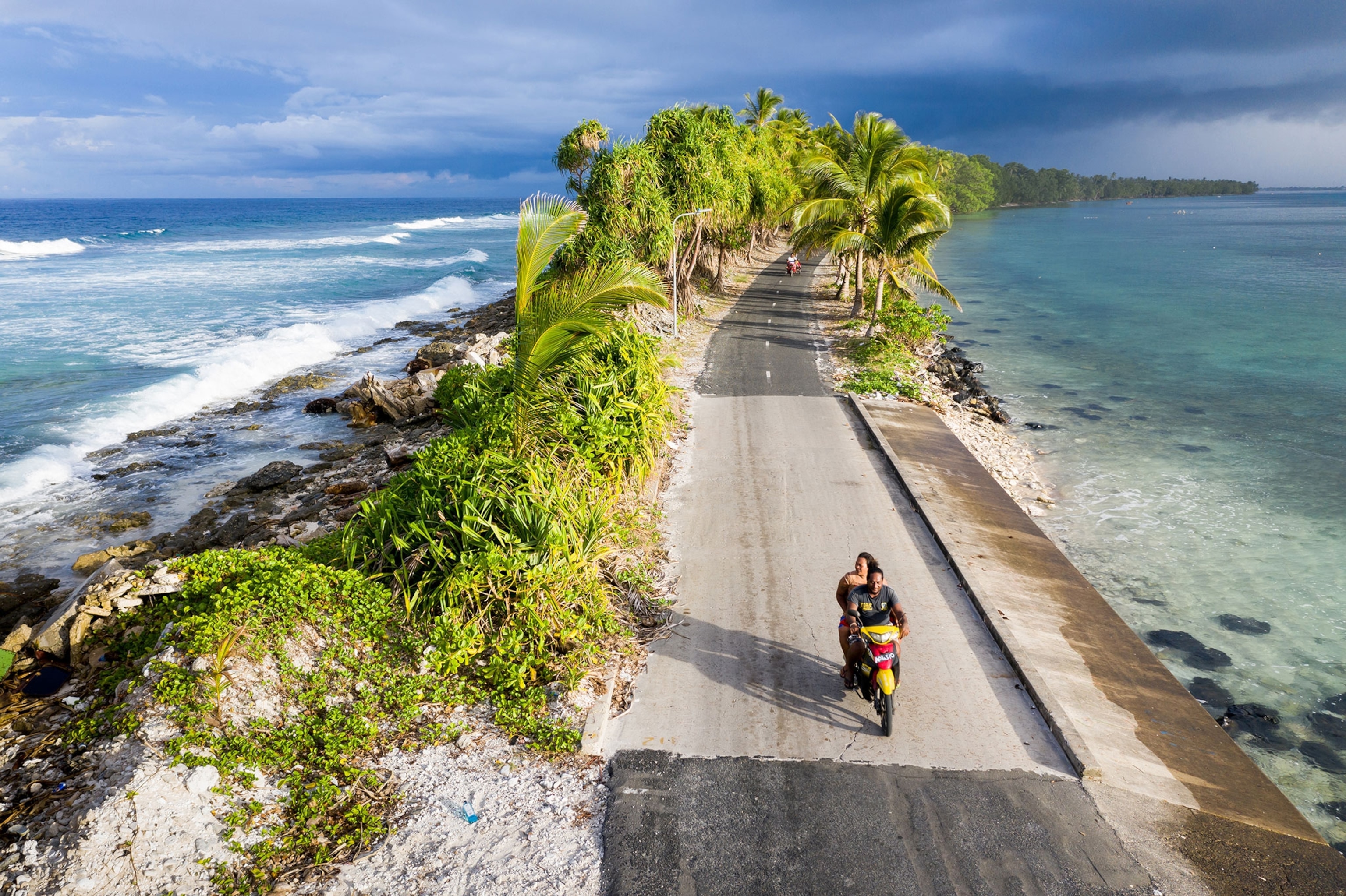
In the thumbnail: A couple on a motorbike pass through the narrowest point of Fongafale Island in the Funafuti atoll, part of the island nation Tuvalu. The Pacific Ocean is on the left, and a lagoon is in the right. Photograph by Sean Gallagher, and description courtesy of National Geographic.
The climate is changing fast, and it’s largely our fault.
If you are unaware of what climate change is the change in the average weather, temperature, and other phenomena. For as long as the Earth has been around, it’s climate has been changing; Not much, but still some.
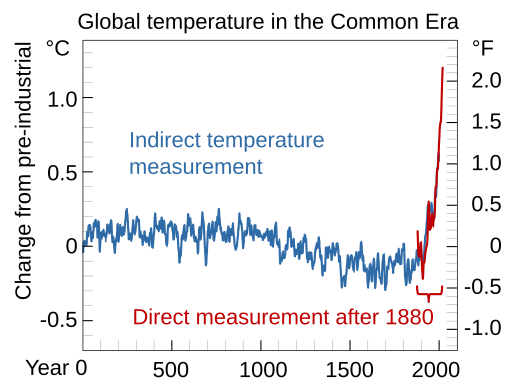
You may wonder why it is an issue if it is a natural process. It is an issue because while yes it can be natural, it has been rapidly and extremely accelerated by humans since the Industrial Revolution, when we started to burn fossil fuels en masse for our steam locomotives, our cars, and our electricity. Many natural processes intensify because of human-accelerated climate change, which is why our summers and winters will continue to get more extreme. Some of those processes however loop back and contribute more to climate change, in a loop unless we do something about it.