In the thumbnail: A woman named Sena from the country Zambia, who was forced to marry someone at the age of 15. You can read more about her story in the description of her picture on WikiMedia.
 Human Trafficking is an issue the world has faced for centuries in various forms that may have gone by other names.
It is an issue that does not get talked about enough these days, as it often gets overshadowed by a plethora of other
more recent or more immediately major issues.
Human Trafficking is an issue the world has faced for centuries in various forms that may have gone by other names.
It is an issue that does not get talked about enough these days, as it often gets overshadowed by a plethora of other
more recent or more immediately major issues.
If you do not already know what human trafficking is, in short it is “the recruitment, transportation, transfer, harbouring or receipt of people through force, fraud or deception, with the aim of exploiting them for profit.” according to the United Nations Office on Drugs and Crime.
Human Trafficking is a shockingly prevalent “industry”, so to speak. In fact, it is so large that according to the International Labour Organisation, forced labour in human trafficking makes an estimated $150 billion US Dollars. Each Year. It is so profitable that in 2012 the International Labour Organisation conducted an investigation to determine how many people were being trafficked, and they were shocked to find out that as of 2012, there was an estimated 21 million men, women, and children being trafficked globally, and that 22% of them are victims of forced sexual exploitation.
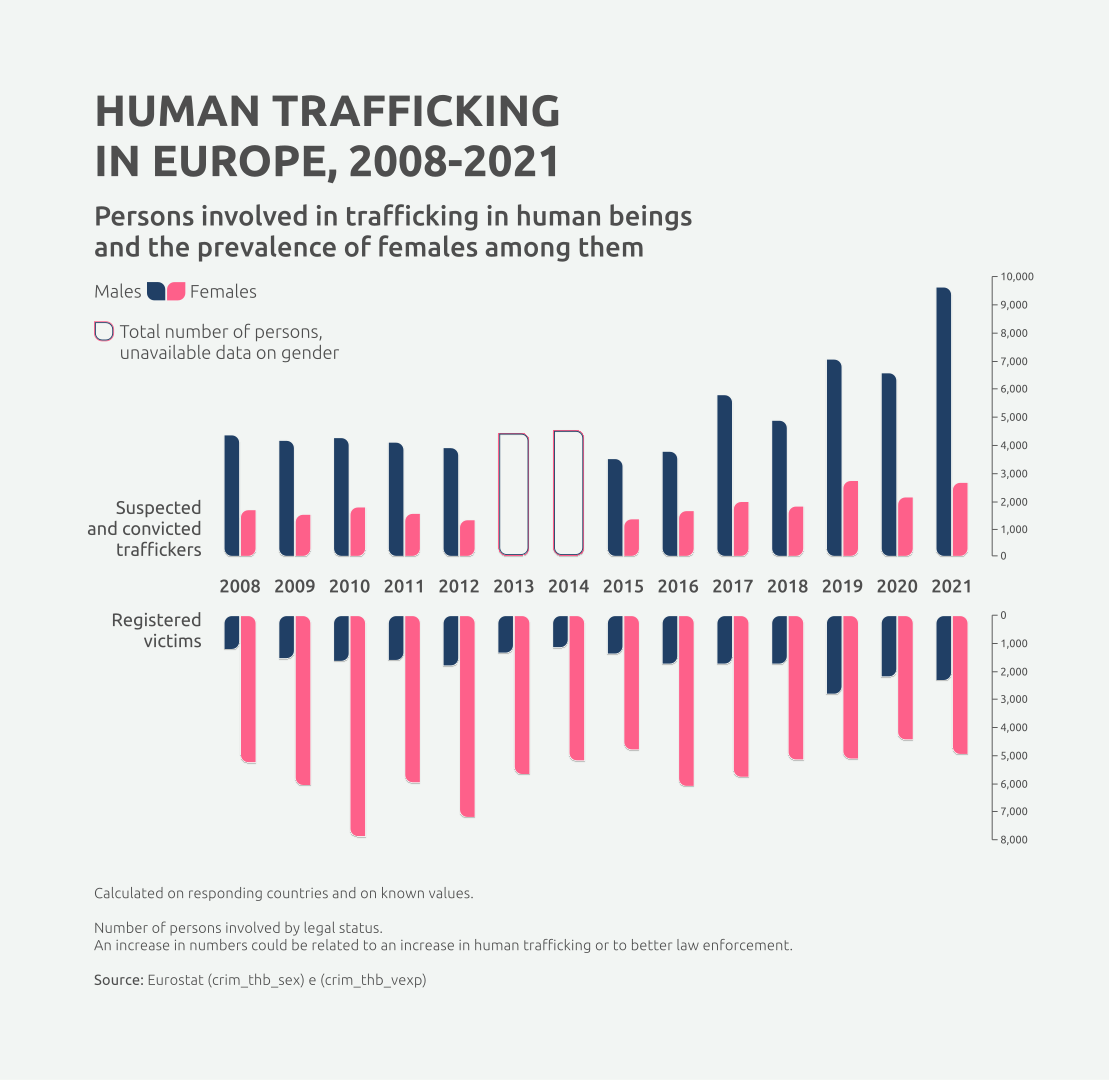
 Despite the large numbers of people being trafficked all around the world, international trafficking does not commonly
take place, but instead it is far more common for intra-regional and domestic trafficking to take place. I am inclined
to believe that it is because governments around the world have started slowly paying more attention to human trafficking,
so it is more challenging to traffic across borders.
Despite the large numbers of people being trafficked all around the world, international trafficking does not commonly
take place, but instead it is far more common for intra-regional and domestic trafficking to take place. I am inclined
to believe that it is because governments around the world have started slowly paying more attention to human trafficking,
so it is more challenging to traffic across borders.
About 35% of all people trafficked are children, and unfortunately they are forced to do things that are hard to even mention. There was a case in 2009 in the United Kingdom of children being forced into prostitution after being groomed and tricked by older men. Some children get sold off to be farmed for their organs, like a case in Nepal, and some get used as surrogates. It is simply appalling to have to write this.
Sometimes it isn’t the children being tricked, but the parents selling their own children. The main reason is the fact that these families experience extreme poverty or have severe debts, and they believe that they can sell their child to help their situation. Many parents are told that their child will receive training or education and will be treated well, when that is hardly ever the case. I am inclined to believe that this relates to the unit 2 slideshow about poverty, though specifically the slide defining extreme poverty, as extreme poverty, or near-extreme poverty seem like the most likely causes for this behaviour in parents.